
7 Hidden Money Mistakes (and how to avoid them)
May 02, 2026Read time - 4 minutes / Disclosure
Avoiding money mistakes can:
- Save you money.
- Make you money.
- Help you leave 9-5 life early.
Unfortunately, most schools teach nothing about money.
The Harsh Truth
According to Ramsey Solutions:
- 51% of Americans live paycheck to paycheck.
- 32% of Americans have $0 saved for retirement.
- 37% of Americans can't cover a $400 emergency expense.
Pretty depressing.
Having a shortage of money and stressing over bills is dang painful.
So how the heck do you avoid becoming one of these statistics?
Being financially secure destroys
— JOHN HENRY (@thejohnhenry) April 7, 2026
99% of your stress.
Money is a massive part of life and
we shouldn't pretend it's not.
A week before my 30th birthday, I was unemployed and $80k in debt.
I owed $30k on a car.
$50k on my credit cards.
And hadn't worked in 9 months.
I was living in a tiny 337 square foot studio in Seattle, Washington.
And found myself wondering how the heck I messed up my finances so bad.
Paying the bills each month was stressful.
Trying to figure out a path forward without destroying my credit score was always on my mind.
But everything changed after a friend helped me get a job in finance.
And I found myself talking with self made millionaires everyday.
"Become a millionaire not for the million dollars, but for what it will make of you to achieve it."
— Jim Rohn
7 Big Money Mistakes
Working in banking and spending time around self made millionaires helped me realize I was making a lot of money mistakes.
And helped me fix them, going from $80k in debt to $1M.
Here's a few of the biggest money mistakes I made (and how to avoid them).
Let's dive in.
1. The Car Trap
According to Nerdwallet, the average monthly payment for a new car is $767.
Add the average insurance payment for a new car which is $200.
And that's a $976 monthly payment.
($767 new car payment + $200 monthly insurance payment = $976 total)
Yikes.
Luckily, the average modern car lasts around 12 years according to Progressive Insurance.
Keeping a car long term instead of upgrading every few years means you have more money to save and invest.
Bonus Tip: It's easier to get a loan to buy a home as well when you don't have a car payment.
2. The Budget Trap
Surveys show around 83% of millennials report they use a monthly budget.
But only 25% stick to it.
Why?
Because most people's budget lives in their head.
Not on paper.
Writing things down makes a drastic difference.
Having a written budget and reviewing it just 30 minutes per month can completely transform your finances for the better.
3. The Savings Trap
No savings can be painful.
Especially when unexpected things happen like:
- The car needs a new tire because of an unexpected nail.
- The dog has an infection and the vet wants to pull 5 teeth.
- A quick visit to the doctor turns into some expensive lab tests.
Having an extra stash of money in a savings account helps bring more peace of mind.
Bonus Tip: Having your savings account at a different bank than your main checking account helps remove the temptation to spend that money.
4. The Investing Trap
According to the Schwab Modern Wealth Survey, around 58% of Americans invest.
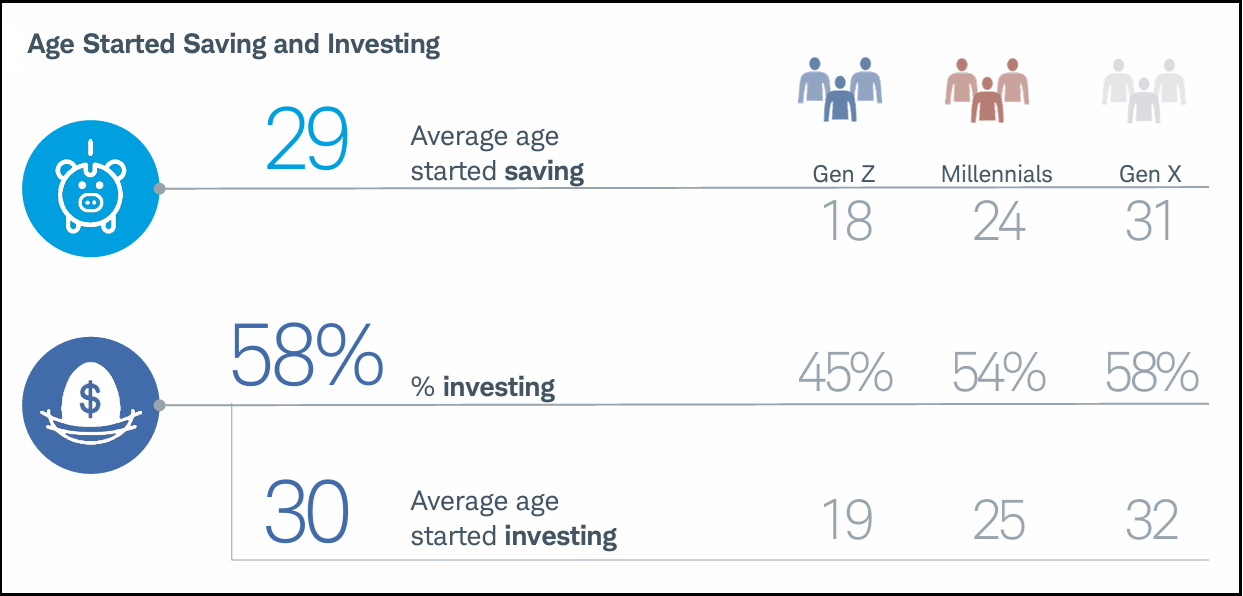
Schwab Modern Wealth Survey
But most people only invest using a retirement account.
And retirement accounts have many rules like:
- How much you can invest.
- When you can access your money without a penalty.
Only investing in a retirement account often means:
Waiting until your 60s to leave 9-5 life, when you can also access social security.
But what if you don't want to leave 9-5 life in your 60s?
What if you want to leave 9-5 life in your 50s, 40s, or even your 30s?
The Brokerage Account
Brokerage accounts offer more flexibility than a retirement account.
Sometimes they're called a "general investing account".
And they don't have any restrictions.
Here's the biggest perk per Fidelity Investments:
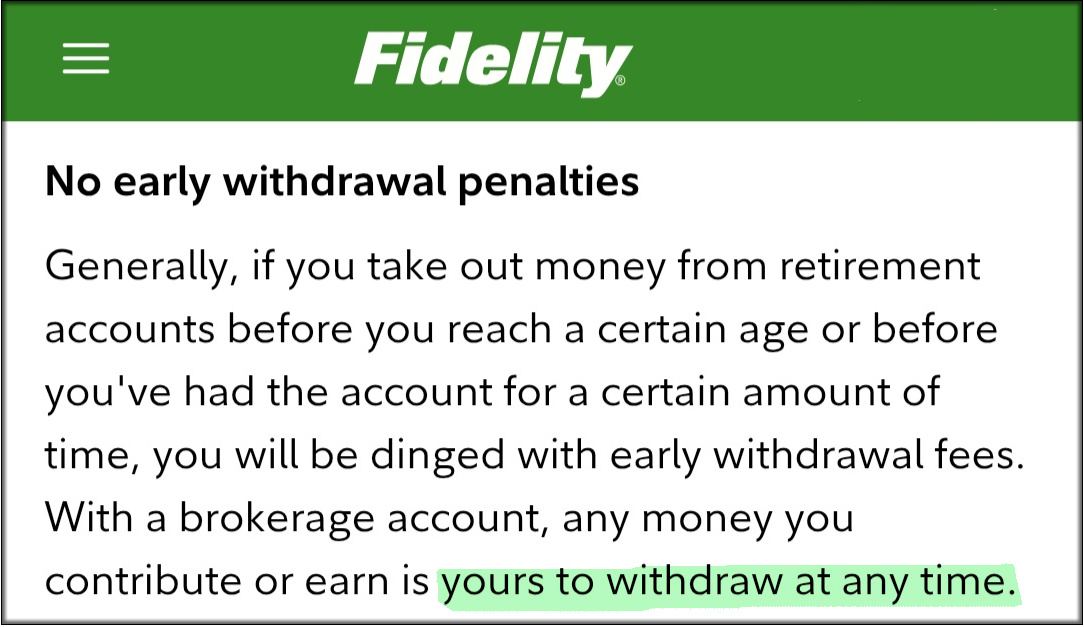
Investing in a retirement account plus a brokerage account means having access to investments penalty free before retirement age.
Personal Note: Using both a retirement account and a brokerage account helped me leave 9-5 life early.
5. The Best Life Trap
A big raise or a big promotion is a great time to celebrate.
Maybe a nicer car.
Maybe some nicer clothes.
Heck, maybe a nicer apartment or even a house.
But according to Yahoo Finance, always inflating these things with every raise is why 40% of people making $500k+ per year still live paycheck to paycheck.
The lesson?
Save and invest more money with each raise 1st, than celebrate your wins 2nd.
6. The Minimums Trap
The average credit card interest rate is around 23%.
Shocking right?
But the more shocking part is what happens if just making the minimum monthly payment.
For example:
If Dave has a $12,000 balance on his credit card.
And he makes the minimum monthly payment.
He'd pay over $27,000.
More than double his $12,000 balance before the card is paid off:
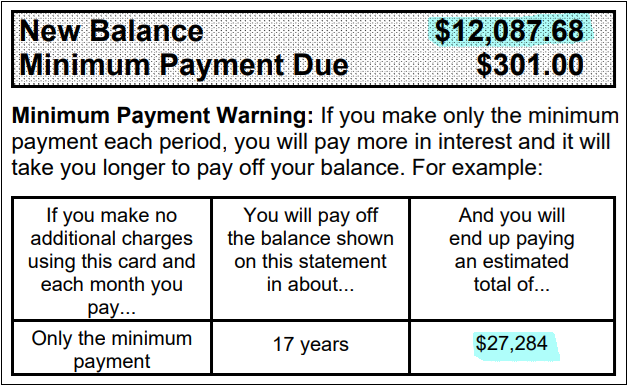
Example
Most credit card bills have a little section like this showing how much you'd pay in total if just making the minimum monthly payments.
Paying more than the minimum on a credit card can save you hundreds or thousands of dollars in interest charges.
7. The More Money Trap
Making more money sure can make life easier.
And often means:
- Buying better food.
- Taking more vacations.
- Helping out a family member in need.
But more money doesn't fix everything.
Some people make $150,000+
— JOHN HENRY (@thejohnhenry) February 6, 2026
have lots of bills, and live
paycheck to paycheck.
Other people make $75,000
have lots of investments,
& plan to retire early.
More money doesn't fix bad habits.
Warren Buffett says it best..
"Do not save what is left after spending, but spend what is left after saving."
— Famous Investor Warren Buffett
The bottom line
When most people think of millionaires.
They think of people who:
- Won the lottery.
- Started a business.
- Invented something cool.
And those are the types of people I thought I'd be helping when I started working as a banker at Chase.
But 10 years later, after leaving my banking job.
I realized most self made millionaires were:
- Teachers.
- Managers.
- Engineers.
- Accountants.
- Etc...
Just everyday people.
People who chose to treat their money a little bit different.
People who decided they wanted a comfortable retirement.
People who wanted to leave 9-5 life early.
So they made a few tweaks to their money habits.
Things anyone can do.
Things so worth doing.
Especially if you want to create a freer life to do more of what you want, and less of what you don't want.
That's all for today.
See you next Saturday.

