7 Money Hacks that Actually Work (not taught in school)
Jun 20, 2026Read time - 4 minutes / Disclosure
Learning how to make more money can:
- Lower your stress.
- Boost your savings.
- Help make 9-5 life optional sooner.
Unfortunately, many people are struggling financially.
The Reality
According to UBS Global Wealth, 40% of the worlds millionaires live in the U.S.
That means 1 out of every 10 U.S. adults are millionaires.
Yet many people are struggling to:
- Pay for rent.
- Pay for groceries.
- Save and invest for retirement.
So how do you go from struggling.
To growing a 7-figure net worth?
"How many millionaires do you know who became wealthy by investing in a savings account? I rest my case."
– Robert G. Allen
In my early 20s, I thought a lot about becoming a millionaire.
To have enough investments that added up to $1M.
But I didn't learn anything in school about money.
And I didn't know any millionaires in real life.
Plus, money was a struggle for my family.
Everyone I knew in the small town I grew up in lived paycheck to paycheck.
But I figured if other people from small towns were able to grow a 7-figure net worth from scratch.
It must be possible.
The more I thought about how to become a millionaire, as a guy that mostly got Bs and Cs in school.
As a guy that identifies as a strong introvert.
The more I realized I didn't want to:
- Start a big company.
- Invent something new.
- Climb the corporate ladder, get a fancy title and work 50-60 hour weeks.
Besides, it was hard to imagine myself actually doing one of those things.
So, I was left with figuring out how to become a millionaire as quickly as possible while working my 9-5 job.
The Part Time Millionaire
After going from selling phones in a mall in my 20s.
To working at a local bank in my 30s.
I noticed many of the bank customers I came across did just that.
They worked a 9-5 job.
They got their money right.
They saved, invested, and after hitting their investing goal.
They quit 9-5 life.
They became part time millionaires.
Because most of them still worked afterwards.
But instead of working a 9-5 job.
They just worked part time for a company or part time for themselves doing something they love.
And some did it in their 30s, some in their 40s, and others in their 50s.
"80% of millionaires are self-made. They started with nothing but ambition and energy, the same way most of us start."
– Brian Tracy
7 Money Hacks That Can Change Everything
Working in banking for 10 years taught me so many things about money.
Things that helped me go from $80k in debt in my 20s to $1M of investments in my 30s.
Here's 7 money hacks I wish I learned sooner.
Let's dive in.
1. The Car Loan Hack
According to Nerdwallet, the average new car payment is $770.
Wild.
A big car payment makes it harder to:
- Save money.
- Invest money.
It also makes it harder to get a loan to buy a home.
When getting a loan to buy a house, the lender will compare your debt to income ratio.
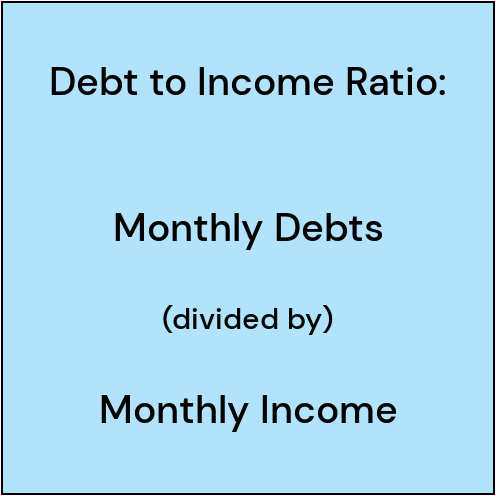
Having a big car payment often means having a high debt to income ratio.
And having a high debt to income ratio can make it harder to get a loan to buy a home.
Getting a loan to buy a home is often easier when you choose to buy when you no longer have a car payment.
2. The Good Debt Hack
People often think all debt is bad.
And sure..
- Car loans.
- Personal loans.
- Credit card debt.
...can be dang painful.
But other types of debt can help build wealth.
For example:
- Home loans.
- Business loans.
Some home loans don't even require a down payment to get the loan.
Like a VA Loan or a USDA Loan.
And some home loans only require a small down payment to get the loan.
Like a Conventional Loan.
Many business loans are also flexible to get, like an SBA Loan to buy a business which allows a down payment as low as 10%.
Good debt can help build wealth faster when loans are used to buy assets that go up in value.
3. The Credit Score Hack
Good credit is a massive money-saver.
A high credit score often means:
- Getting a lower interest rate and having a lower payment on a home loan.
- Getting approved for a higher credit limit when applying for a loan.
- Getting a better price when shopping for insurance.
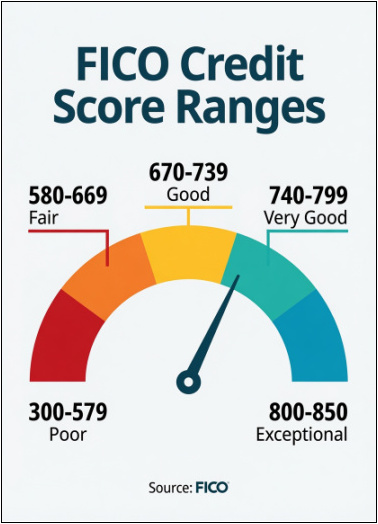
The authorized user hack can be a fast way to boost a low credit score.
For example:
Jennifer and Dave want to buy a home.
Jennifer has a great credit score.
But Dave's credit score isn't so great.
Both Jennifer and Dave know his low score can affect the interest rate they get on a home loan and how much money they pay for insurance.
So, Jennifer decides to add Dave as an authorized user to a credit card she's had for a long time that has a big credit limit and a zero balance.
Jennifer figures if adding Dave to her credit card doesn't help his credit score.
She can always go back and delete him as an authorized user.
Jennifer logs into her credit card account online and in 2 minutes adds Dave as an authorized user.
Within 30 days, Jennifer's old credit card she's had for a long time with a big credit limit and a zero balance shows up on Dave's credit report.
And his credit score goes up 80 points.
The authorized user hack can be a quick way to boost a low credit score (but there's no guarantee it will work).
4. The Index Fund Hack
According to JP Morgan Asset Management, between 2002 - 2021 the average investor picking their own stocks grew their investments 3.6% per year on average.
But people that invested in just 1 thing.
An S&P500 index fund.
Grew their investments 9.5% per year on average.
An S&P500 index fund includes the top 500 largest companies in America and the largest S&P500 Fund is:
The Vanguard S&P500 ETF (VOO).
$100 invested in an S&P500 fund today means automatically owning:
- $7.81 of NVIDIA stock
- $6.81 of Apple stock
- $4.53 of Microsoft stock
- $3.72 of Amazon stock
- $3.39 of Google stock
+ 495 other companies
Investors that choose to invest in an S&P500 fund often make more money long term than investors that try to pick their own stocks.
5. The Lower Taxes Hack
Investors get special treatment.
For example.
Let's say Mike is a single guy renting an apartment.
He doesn't have any special tax write offs.
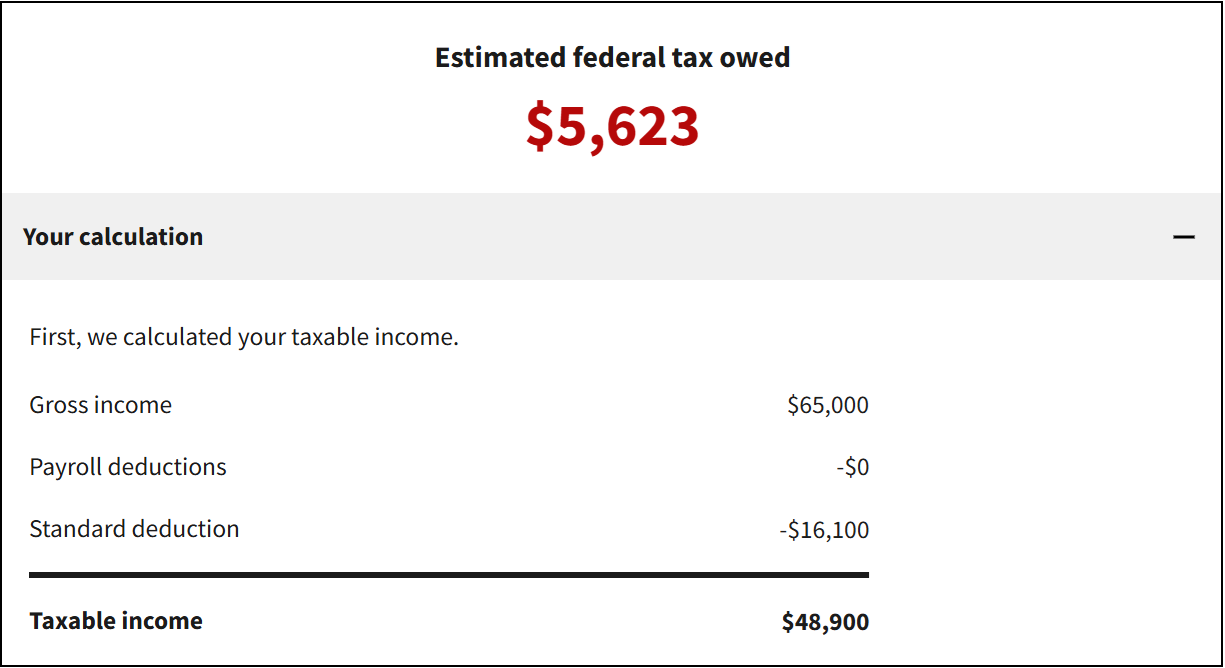
And works a regular 9-5 job making $65,000 per year.
Here's how much money he'd pay in Federal Taxes in 2026 according to the IRS:
IRS estimate
The IRS website shows:
$5,623 of the money Mike makes would go to pay his federal taxes.
Now let's run another example.
This time, let's say Mike isn't working a regular 9-5 job.
Instead, he sells an investment inside his general investing account.
An investment he's had for longer than a year and he makes $65,000 in profit.
If that was his only income, here's how much money he'd pay in Federal Taxes in 2026 according to the IRS:
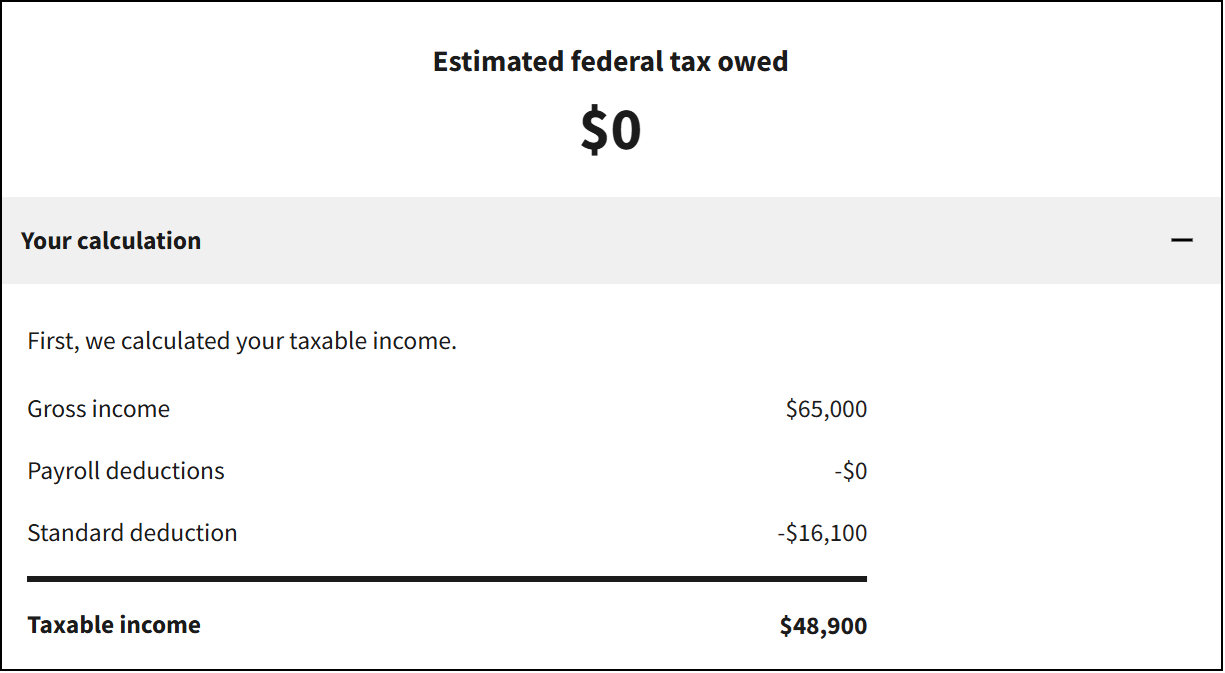
IRS estimate
Hard to believe right?
This blew my mind the first time I saw it.
The Mike working 40 hour weeks making $65,000 in 2026 pays $5,623 in federal taxes.
And the Mike not working a 9-5 job that sells a long term investment in a general investing account making $65,000 in profit in 2026 pays $0 in federal taxes.
If you want to run your own examples, you can find the IRS Tax Withholding Estimator here.
People making money from long term investments are often treated differently than people making money as an employee.
NOTE: With taxes it's important to talk with a professional about your individual situation before selling investments.
6. The Invest Early Hack
Being young has perks.
Especially with investing.
For example.
Let's say Mike at age 30 found a way to save $10 a day.
And at the end of every month he had an extra $300 saved.
And he decided to invest that $300 in an S&P500 fund.
If he did it for 30 years, here's the math:
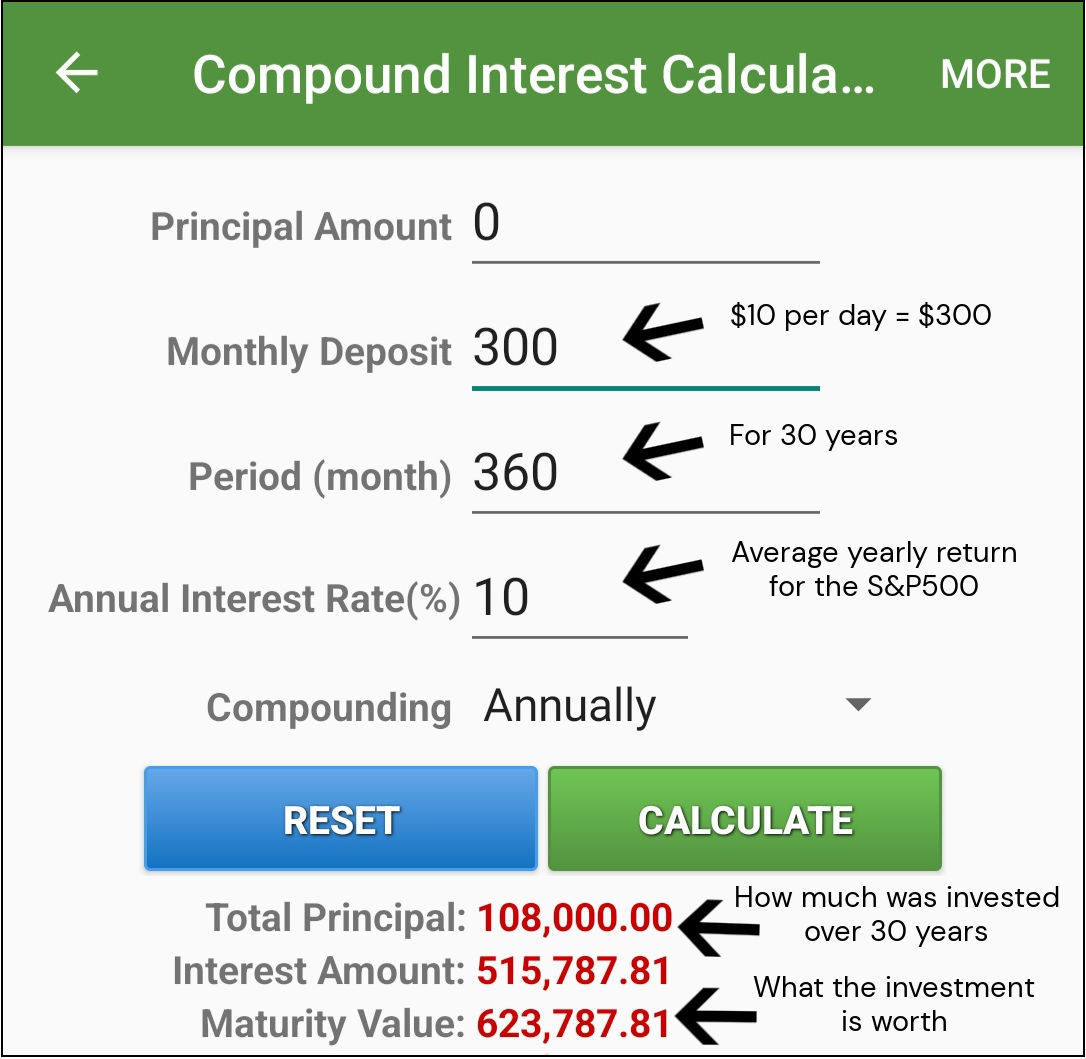
Estimate
Now let's say Mike did the exact same thing.
But waited until he was age 40.
If he did it for 20 years, here's the math:
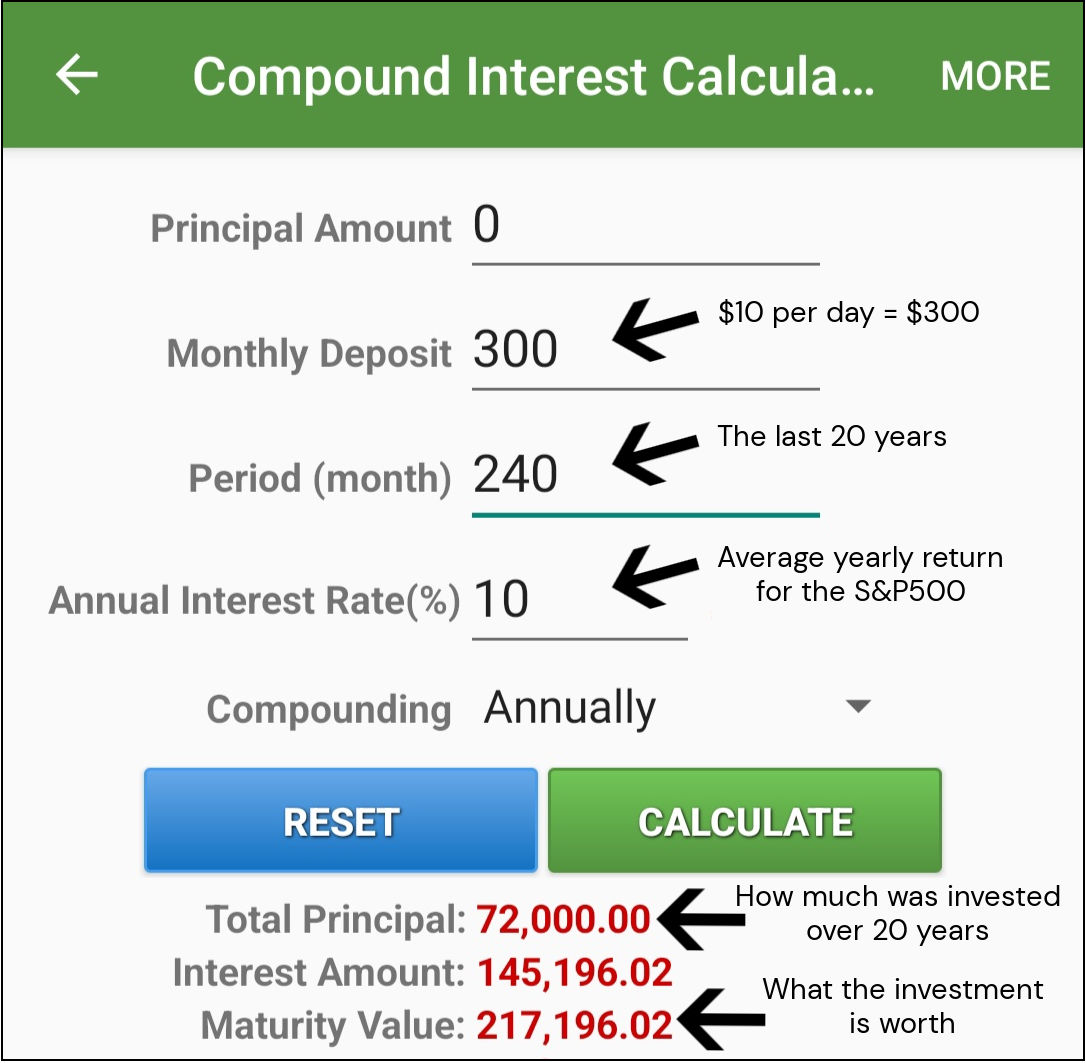
Estimate
So, if Mike started investing at age 40.
The estimate shows he'd have:
- $217,196
But if Mike started investing at age 30.
The estimate shows he'd have:
- $623,787
A massive difference.
Investing earlier in life means your investments have more time to grow, but it's never too late to get started.
NOTE: It's important to remember these are just estimates, not guarantees.
7. The Invest 1st Hack
Paying yourself 1st can change everything.
Most people treat money like this:
1. They get their paycheck.
2. They pay their bills.
3. They invest if they have any money leftover.
The Invest 1st Hack says to change the order of these things.
To do it like this:
1. Money being invested is automatically deducted from the paycheck (just like taxes).
2. Receive the paycheck.
3. Pay the bills.
The Invest 1st Hack says to treat investing just like taxes.
To make it a mandatory thing.
Having your investment money come out of your paycheck automatically means you can't spend what you can't see.
The bottom line
Out of these 7 different money hacks.
The Invest 1st Hack was one of the biggest lessons I learned while working in banking.
To always have money that was going to be invested deducted from my paycheck 1st (just like paying taxes).
And then paying bills and learning to live on what's left over.
It's what I saw the part time millionaires do.
When I was younger, I tried to do it the other way around.
- Get the paycheck.
- Pay the bills.
- Try to invest any leftover money.
But the thing is, there rarely was any leftover money. I always managed to spend it somehow.
The Invest 1st Hack helps fix that.
Most employers allow the option to split up a paycheck between a checking account, a savings account or an investing account automatically.
(instead of just sending all of the money to a checking account)
So, if you're near the beginning of your investing journey.
Give it a try.
Split up the paycheck between a few different accounts automatically.
And if you've already discovered this little hack (hopefully sooner than I did) and you're investing. I hope you're enjoying the 70%+ increase in the stock market's value over the past 3 years.
That's all for today.
See you next Saturday.

