7 Money Terms Worth Knowing (while building wealth)
Oct 03, 2026Read time - 4 minutes / Disclosure
Today let's review 7 money terms worth knowing (while building wealth).
Knowing more about money can:
- Destroy your debt.
- Grow your savings.
- Help you build wealth faster.
Unfortunately, most millennials learned nothing about money in school.
The Reality
According to Empower Financial, only 8 states in America required a personal finance class to graduate in 2020.
Which means most millennials didn't learn how to:
- Make money.
- Manage money.
- Multiply money.
Which also means the parents of most millennials likely didn't learn these things either in school.
Choosing to learn on your own can change everything.
"Become a millionaire not for the million dollars, but for what it will make of you to achieve it."
— Jim Rohn
Like most millennials, I didn't learn about money in school.
Except to "get a good job".
And to "make as much money as possible".
When looking around at people 10 or 20 years ahead of me.
They all seemed to be playing that game.
- Chasing raises.
- Chasing promotions.
- Trying to climb the corporate ladder.
While seeking money advice as a young person.
Many of these people said something I couldn't stop thinking about.
They said they "felt stuck".
Like they were living the same day over and over.
Like they were missing out on doing the things they truly wanted to do in life.
That they were counting down the days to finally leave their 9-5 job in their 60s.
The Retirement Trap
Many people working a 9-5 job long-term find themselves feeling this way.
Or so I've found.
Even though they did everything right according to society's standards, like:
- Saving money in their 401k retirement account at work.
- Opening and saving money in a 2nd retirement account.
One big thing was accidentally missed.
Money in a retirement account is meant to be accessed at retirement age.
Which the U.S. government says is age 59 1/2.
Plus, social security payments don't start until age 62.
Which makes leaving 9-5 life 15 or 20 years early much more difficult.
The Freedom Short Cut
After hearing many people explain why they "felt stuck" in their 9-5s.
It became obvious I needed to make changes to my money plan.
Because I didn't want to feel stuck too.
And wanted the option to leave 9-5 life 15 or 20 years early to do my own thing.
Which meant I needed to view my investments in 2 different ways.
Way 1:
Investing for Retirement.
Investing using a retirement account so I'd have money to live off of during retirement age in my 60s+.
Way 2:
Investing for Freedom.
Investing using a non-retirement account to invest (like a brokerage account) so I'd have money to live off of before retirement age and the option to leave 9-5 life 15 or 20 years early.
7 Money Terms Worth Knowing
On my journey to build $1M of stock market and real estate investments from scratch.
Learning these 7 money terms helped grow my finances faster.
Hope they're useful.
Let's dive in:
1. Net Worth
A way to keep score with your money over time.
Net worth = what you own minus what you owe
2. Assets
Possessions you have like:
- Cash.
- Stocks.
- Real estate.
Assets = anything you own that has value
3. Liabilities
Things you owe like:
- Student loans.
- Personal loans.
- Credit card debt.
Liabilities = anything you owe
4. Bad Debt
Debt that does not help build wealth like:
- Payday loans.
- Car loan debt.
- Credit card balances carried month to month.
Bad Debt = debt on things that don't go up in value
5. Good Debt
Debt that can help build wealth like:
- A home loan.
- A business loan.
- A student loan (if it helps you earn more money).
"Debt itself isn't the problem, but rather the direction of cash flow."
— Robert Kiyosaki
Good Debt = debt on things that can go up in value
6. Inflation
How fast the cost of everyday living goes up like:
- Car prices.
- House prices.
- Grocery prices.
Inflation is something the government plans on happening every year:
"The overarching objective of monetary policy today is to bring inflation down to 2%."
— John Williams (New York Fed President)
Except recently, inflation has been much higher than the government's goal.
For example:
Something that cost $100 in 2016.
Now costs $139 in 2026.
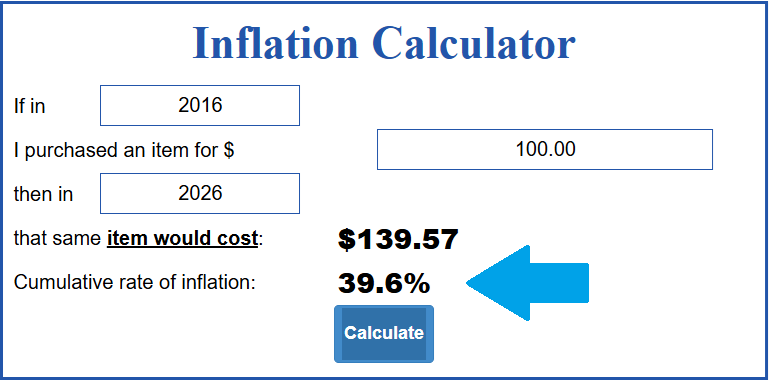
Inflation = an increase in prices over time
7. Return on Investment
How much an investment changes over time.
For example:
- 10 years ago, getting a loan to buy an average house in America cost $300,000. Now in 2026, an average house costs $410,000.
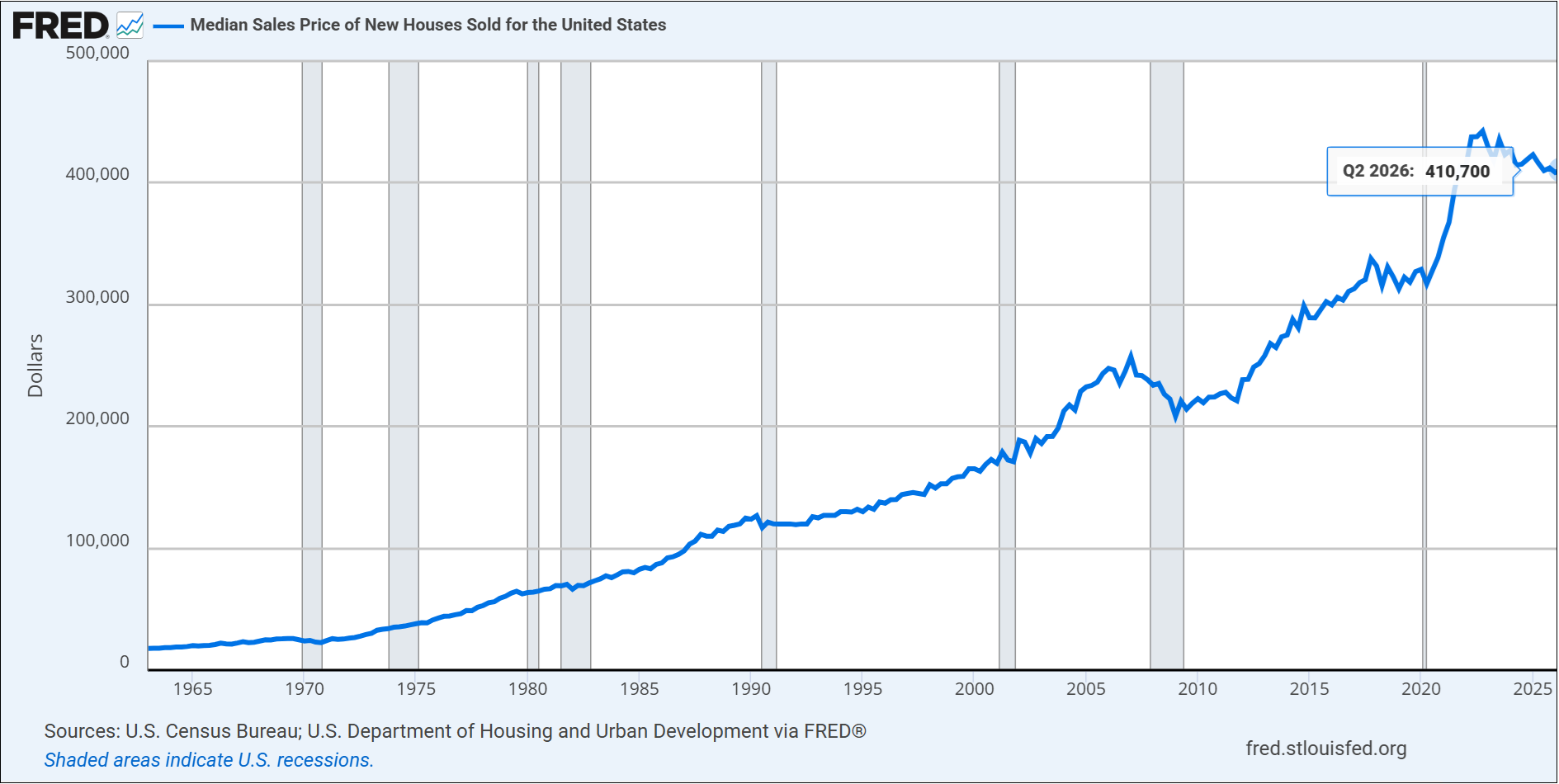
House price history
- 10 years ago, investing in the S&P500 (the stock market) and keeping the money invested. Now in 2026, means that investment is up 316%.
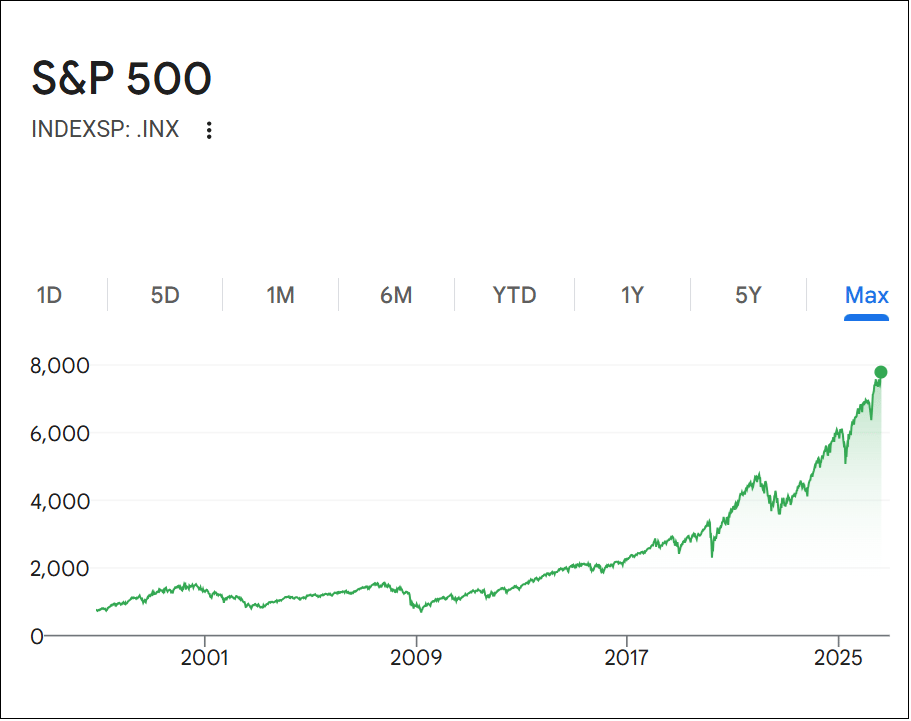
Stock market history
"Most great fortunes are built slowly. They are based on the principle of compound interest."
— Bryan Tracy
Return on Investment = how much profit or loss an investment makes
The bottom line
Of these 7 money terms, one I wish I'd learned about sooner is the power of inflation.
Before I started investing, when the cost of things went up (and they always do), inflation was dang painful.
But after I started investing, when the cost of things went up, I noticed there was less pain because my stock market and real estate investments also went up.
If you haven't started investing.
Inflation can be painful (I've been there too).
But if you're building yourself a nice little nest egg of investments.
Inflation is still a pain, but it stings less.
Or so I've found.
Thanks for reading. Keep building 💰
That's all for today.
See you next Saturday.