The 7 Homebuying Questions (that everyone asks)
Aug 08, 2026Read time - 4 minutes / Disclosure
Knowing the 7 most common homebuying questions (and answers) can help you:
- Learn your options.
- Choose your strategy.
- Buy with confidence.
Unfortunately, buying a house can be confusing.
The Overwhelm
According to a recent Wells Fargo survey:
- 80% of people fear making a mistake when buying a house.
- 88% are unsure how the homebuying process works.
- 90% don't understand their closing costs.
That's a lot of confusion.
Especially when buying a house is often the largest transaction most people make.
And often becomes the largest asset they own.
Although buying a house has become more difficult lately.
The 2026 Bank of America Homebuyer Insights Report shows:
- 79% of people say they still plan to buy at some point in their life.
"Owning a home is a keystone of wealth... both financial affluence and emotional security."
– Suze Orman
Getting a loan to buy my first home in Seattle, Washington was exciting.
And stressful.
Not knowing what to expect is where most of the stress came from I suspect.
Plus fearing I'd make a big mistake.
But trusting my real estate agent Tonya, and my loan officer Joe to steer me in the right direction was a big help.
And moving into that tiny condo with a friend and my basset hound at the time is something I'll never forget.
The Homebuying Journey
After watching the value of that little condo go up $100,000 in 2 years.
I was hooked on real estate.
And found myself learning how to get 6 more loans to buy 6 more properties over the next 10 years.
And lord knows I made mistakes along the way.
I also found myself working as a banker at Chase helping hundreds of other people get home loans.
Watching people figure out their money and buy a home was one of the most fulfilling job I've ever had.
The 7 Biggest Homebuyer Questions
Over the 10 years I spent working as a banker.
The same 7 homebuyer questions kept coming up.
And I found the better people understood answers to these questions.
The more likely they were to buy a house.
So here's the 7 biggest homebuyer questions worth knowing the answers.
Let's dive in.
1. How Does Home Buying Work?
Buying a house is 7 steps.
Each step gets you closer to your final goal.
And you work through the steps in order:
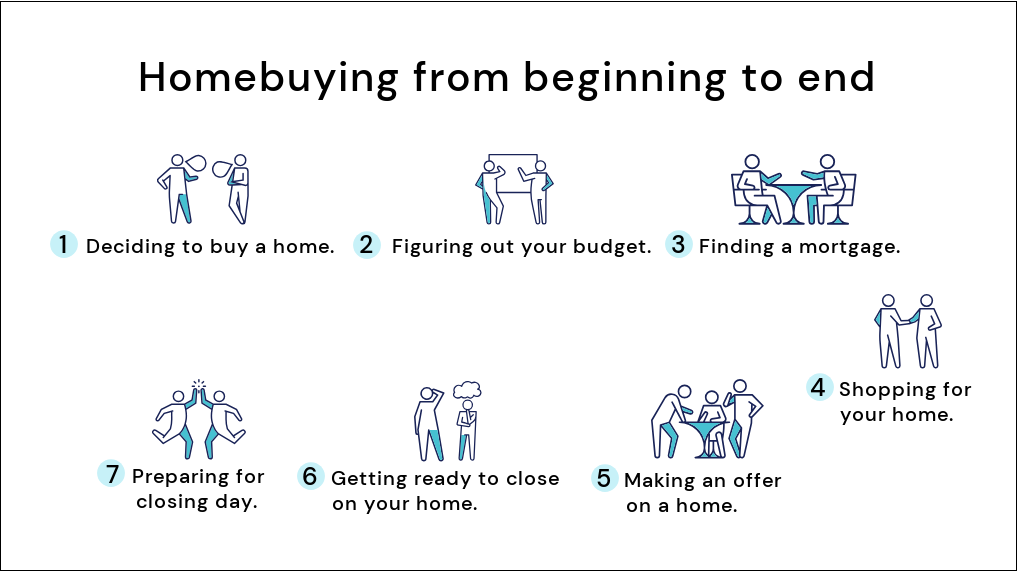
Steps to buy a house
But don't worry.
A loan officer and a real estate agent will help you work through the steps.
Knowing the 7 steps to buy a house helps make your homebuying journey easier.
2. How Much Do I Need For My Down Payment?
America has some of the most flexible home loan programs of any country.
These programs are often found in 3 places:
- Banks.
- Credit unions.
- Or through a mortgage broker.
The 4 most common home loans are:
1. The VA Loan: The VA Loan which stands for Veterans Administration does not require a down payment. It's offered to people affiliated with the military like: veterans, active duty members and reservists or national guard members.
2. The USDA Loan: The USDA Loan which stands for United States Department of Agriculture does not require a down payment. It's offered to people buying a home in the suburbs or rural areas but you must be under the annual income limit to qualify (which varies based on where you live).
3. The Conventional Loan: The Conventional Loan requires a 3% down payment and is available to all homebuyers that qualify. So buying a $400,000 home with a 3% down payment means coming up with $12,000.
But don't stress.
We'll also talk about ways to get homebuyer money.
4. The FHA Loan: The FHA Loan which stands for Federal Housing Administration requires a 3.5% down payment and is available to all homebuyers that qualify. So buying a $400,000 home with a 3.5% down payment means coming up with $14,000.
Your loan officer will help you figure out which loan is best for you.
And getting a loan to buy a house is a common thing.
"91% of first time buyers finance their purchase."
– National Association of Realtors
Buying a house doesn't mean you need to pay for everything in cash (unless you want to).
3. What Does My Credit Score Need To Be?
Credit score rules are different based on the lender offering you the home loan.
But in general, for:
- The VA Loan: Many lenders require a minimum credit score of 580.
- The USDA Loan: Many lenders require a minimum credit score of 640.
- The Conventional Loan: Many lenders require a minimum credit score of 620.
- The FHA Loan: Many lenders require a minimum credit score of 580.
Some home loan programs don't even have a minimum credit score requirement.
Having a low credit score (or no credit score) doesn't mean you can't qualify to get a home loan.
4. What Are The Costs I Need To Pay?
Money paid when buying a house is called your "closing costs".
And it's made up of 2 things:
1. Your Down Payment: Some loan programs don't require a down payment at all like The VA Loan or The USDA Loan. But you always have the option to put down more money than required, if you want to have a smaller loan and a smaller monthly payment.
2. Your Other Costs: This includes everything else related to buying a home like: the escrow/attorney fees, government fees, lender fees, title fees. These costs are usually between 2% to 4% of the purchase price of a home. Your loan officer will help you figure all of this out.
Even if getting a loan that does not require a down payment. You still need to find a way to pay for your other costs. For example: A $400,000 home plus other costs of 3%, equals $12,000.
But the good news.
There's many ways to help cover these costs (if you know how to get homebuyer money).
→ You can read how I got $30,000 to help buy a house here if you're interested.
Knowing how closing costs work and how to get homebuyer money can help you buy a house sooner.
5. How Long Does It Take?
Finding a house to buy is different for everyone.
According to the National Association of Realtors.
It takes the average person 10 weeks to find a house they want to buy.
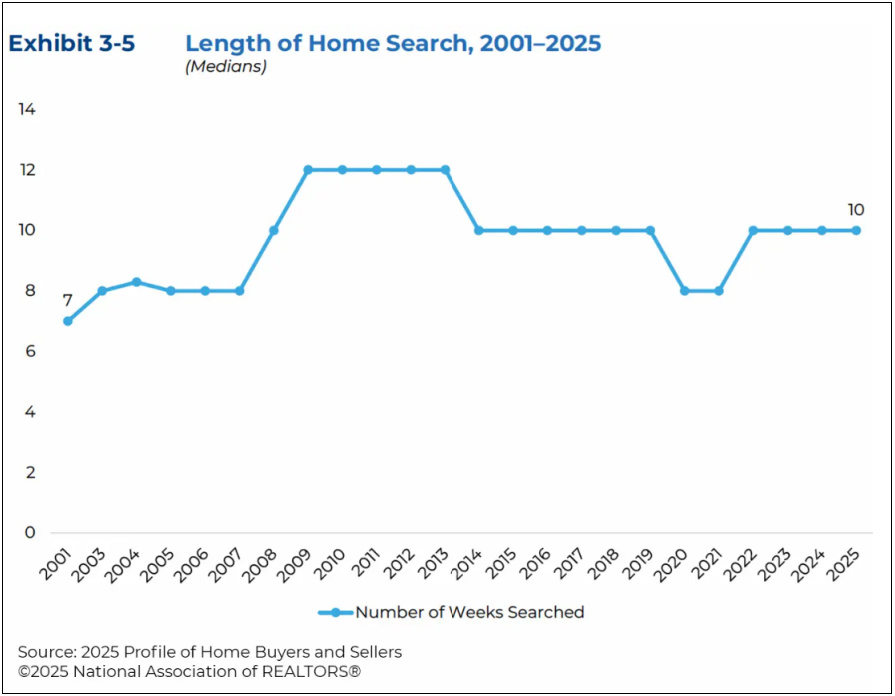
Weeks to find a house
It normally takes 3 to 6 more weeks after finding a house you want to buy to close on it and get your keys.
Knowing how long the home buying process takes helps you plan in advance.
6. What If I Change My Mind?
Most offers to buy a house includes the option to cancel.
How it works:
- After finding a home you want to buy. Your real estate agent will write up an offer. And they will present your offer to the home seller.
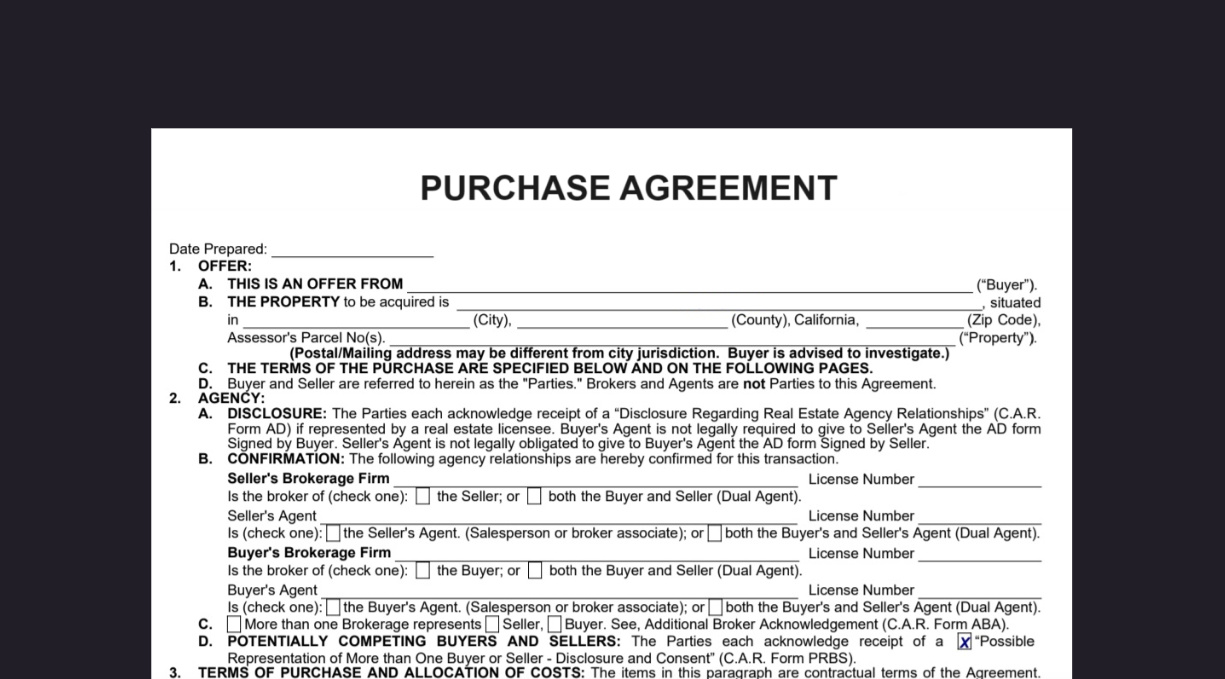
Example offer
- Inside the offer your real estate agent can include "contingencies". Which is a fancy way of saying if certain conditions aren't met, you have the option to change your mind and not buy the house.
For example:
- If you do a home inspection on the house you want to buy, and you aren't happy with the results. Having a "contingency" may give you the option to change your mind and not buy the house.
Having "contingencies" can help give you peace of mind when making an offer to buy a house.
7. What Are Interest Rates Going To Do?
The past few years interest rates have gone up.
But they're still lower then they've been in the past.
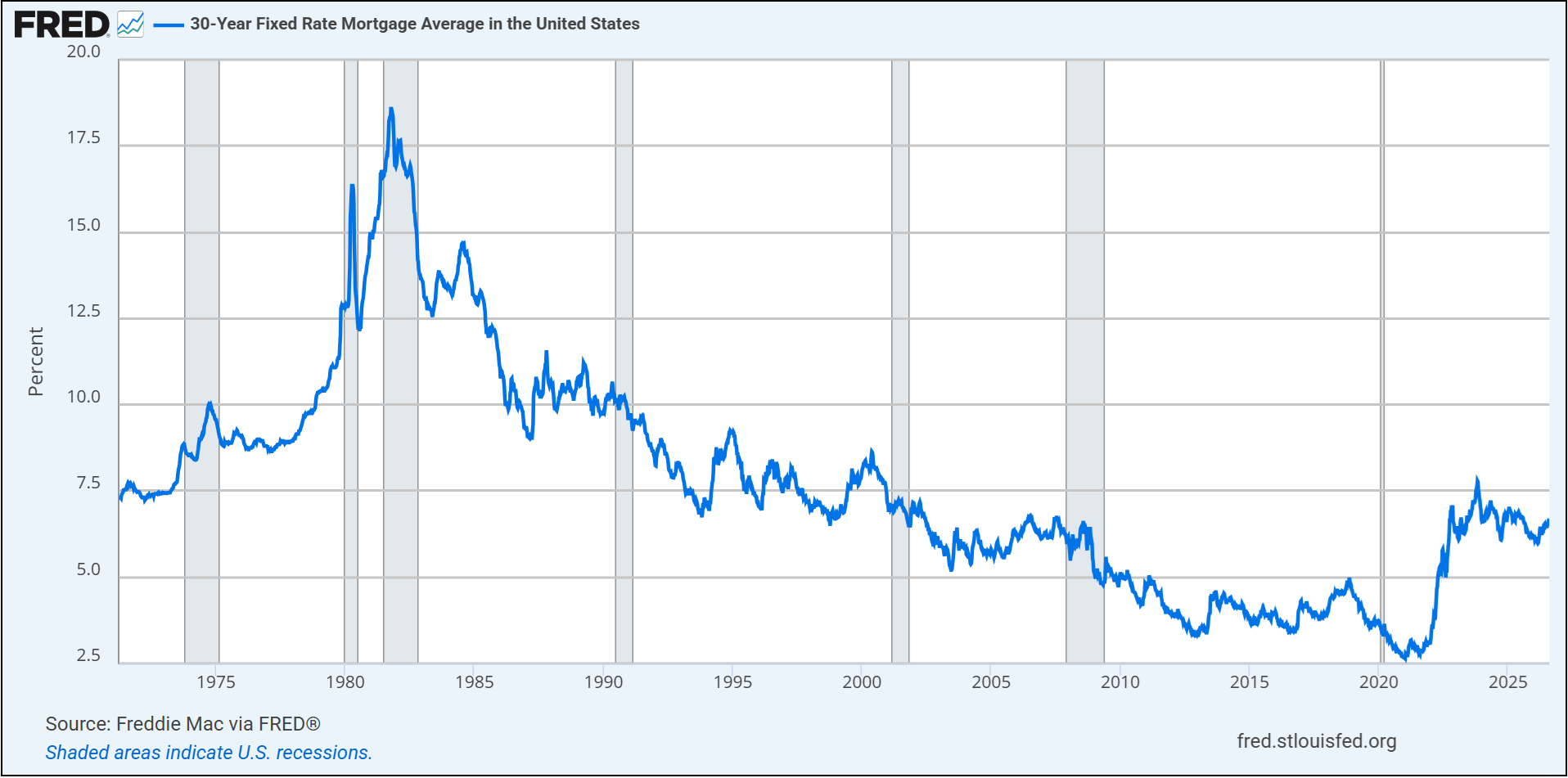
Interest rates history
Trying to guess what rates are going to do is difficult.
But getting a loan to buy a house doesn't mean you're stuck with that loan and interest rate forever.
If interest rates drop in the future.
It may be possible to refinance your home loan to a lower interest rate just like refinancing a student loan or refinancing a car loan.
Remembering it may be possible to refinance your home loan if interest rates drop may save you money in the future.
The bottom line
Buying a house can be overwhelming.
And not knowing what to expect can make it confusing.
But after learning answers to the biggest homebuying questions.
Buying a house can feel a bit less intimidating.
And the path to becoming a homebuyer is a bit clearer (or so I've found).
Hope this is helpful if you see yourself buying a home or a rental property at some point in the future. Thanks for reading.
That's all for today.
See you next Saturday.