The 7 Investing Questions (that everyone asks)
Aug 15, 2026Read time - 4 minutes / Disclosure
Knowing the 7 most common investing questions (and answers) can help you:
- Learn your options.
- Choose your strategy.
- Invest with confidence.
Unfortunately, investing can be a confusing thing.
The Facts
According to a recent survey by Empower, an investment company.
Most people feel neutral or unconfident about investing including:
- 53% of Gen X.
- 55% of Millennials.
- 61% of Gen Z.
That's a lot of confusion.
Especially since investing can lead to leaving 9-5 life early.
But what exactly should you know?
And most importantly.
What mistakes should you avoid?
"More important than the will to win, is the will to prepare."
– Charlie Munger
Like most people, I felt completely confused over investing at first.
But also excited.
Excited at the thought of making money with my money.
While staring at my first investment account, a 401k retirement plan offered by my employer.
20 different investment options stared back at me.
My mind raced..
Which investment should I pick?
Should I pick 1, 2 or 3 of them?
And what if I pick the wrong thing and lose money?
Trying to decide gave me anxiety.
But I figured investing $100 per paycheck while learning more about investing was better than doing nothing.
The Investing Journey
After watching my tiny investment account make a few hundred bucks that first year.
I was hooked on investing.
The idea of making money with my money excited the heck out of me.
And if I could build up enough investments, I figured I could retire early.
Or, I could work part time instead of spending 40 hours of my life each week working for 40 years.
As time passed I found myself opening 3 more investing accounts.
And watched my investments grow from $0 in my 20s to over $500k in my 30s.
Figuring out how to get loans to buy 6 properties after buying my first tiny condo also became a weird obsession.
But I also made tons of mistakes along the way.
Like getting fired at age 29.
Not working for 9 months.
And almost filing for bankruptcy.
Fortunately, getting a job in banking helped turn things around.
And helping other people figure out their money became my new obsession.
The 7 Biggest Investor Questions
After working as a banker for 10 years at Chase Bank.
I noticed people asking the same 7 investing questions.
And I found the better people understood answers to these questions.
The more likely they were to start investing and stick with it.
So here's the 7 biggest investing questions worth knowing the answers.
Let's dive in.
1. How Do I Start Investing?
Choose a stock brokerage company.
Opening an investment account takes just 10 minutes online.
Here are 3 of the largest investment companies to choose from:
- Charles Schwab.
- Vanguard.
- Fidelity.
Many investment companies allow you to start investing with as little as $1.
If you have a fulltime job.
You may already have an investment account setup in your name (a 401k retirement account).
Opening an investing account is the first step to start investing.
2. Which Account Type Should I Open?
There's many different types of investing accounts.
3 common ones are:
1. The 401k: Many employers offer a 401k retirement account. And you can put part of each paycheck into this account. The best part, many employers will match part of the money you put into your account. You then pick your investments and your money is invested automatically.
2. The IRA: The IRA which stands for Individual Retirement Account is another type of investing account. You can open the account online in just 10 minutes. Afterwards, you decide how much money to invest, how often you want to invest and what you want to invest in.
3. The Brokerage Account: The Brokerage Account which is also called a general investing account is the most flexible investing option. You can open the account online in just 10 minutes. After opening it, you decide how much money to invest, how often you want to invest and then pick your investments.
Many people start with 1 investing account like a 401k or an IRA, then add more as they learn more about investing.
3. How Many Investing Accounts Do I Need?
Different investing accounts are for different purposes.
They're usually broken into 2 categories:
Brokerage Accounts can be used anytime for anything like planning an early retirement. They are the most flexible investing account and money inside a brokerage account can be accessed anytime you want without a penalty.
Retirement Accounts are designed to to be accessed during retirement which the U.S. government defines as age 59 1/2 or older. Plus retirement accounts have lots of rules like:
- How much money you can invest each year.
- When you can take your money out of the account without paying a penalty.
For example:
Someone who wants to retire from 9-5 life early may choose to invest using a brokerage account and choose to invest using a retirement account.
The number of investing accounts you have depends on your investing goals.
4. How Much Should I Invest?
According to Vanguard, one of the largest investment firms.
A good rule suggests investing 15% of each paycheck into retirement.
And making your investments an automatic thing every payday.
For some people (like me in the beginning), investing 15% of each paycheck can feel impossible.
Starting smaller, like 5% of each paycheck or 10% with a goal of reaching 15% can be a good strategy.
Investing any amount for retirement beats investing nothing when just starting out.
5. What Should I Invest In?
There's thousands of investments to choose from.
Here's a few of the most common types.
What is a stock?
Buying a stock means you own a small part of a business.
The stock price goes up or down depending on the success of the business.
What is a bond?
Buying a bond means you're acting as a lender to governments (cities, states, etc) or companies (banks, utility businesses, etc).
Owning a bond is like getting paid interest to loan out your money.
What is a fund?
Buying a fund means you own a small part of many things.
For example: If buying a stock fund, you own a small part of hundreds of companies.
So which of these 3 things should you actually invest in?
People have debated this for centuries.
Here's one of the most popular answers from a billionaire investor:
"The goal of non-professionals shouldn't be to pick winners, rather to own businesses bound to do well, a low-cost S&P500 fund will achieve this goal."
– Warren Buffett
Buffett encourages most people to simply invest in an S&P500 fund.
Which means owning a small part of America's 500 largest companies including:
- Tesla
- Apple
- Amazon
- Microsoft
+ 495 other companies
The largest S&P500 fund is:
- The Vanguard S&P500 ETF (VOO)
Most retirement accounts at work also include an S&P500 fund as an investment option.
Another popular way to invest is getting a loan to buy real estate.
There's many different types of investments and the best type for you depends on your goals and the kind of investor you want to become.
6. How Much Will I Make?
There's no guarantees in life, especially with investing.
But over the past 30 years the S&P500 has went up 10% per year on average.
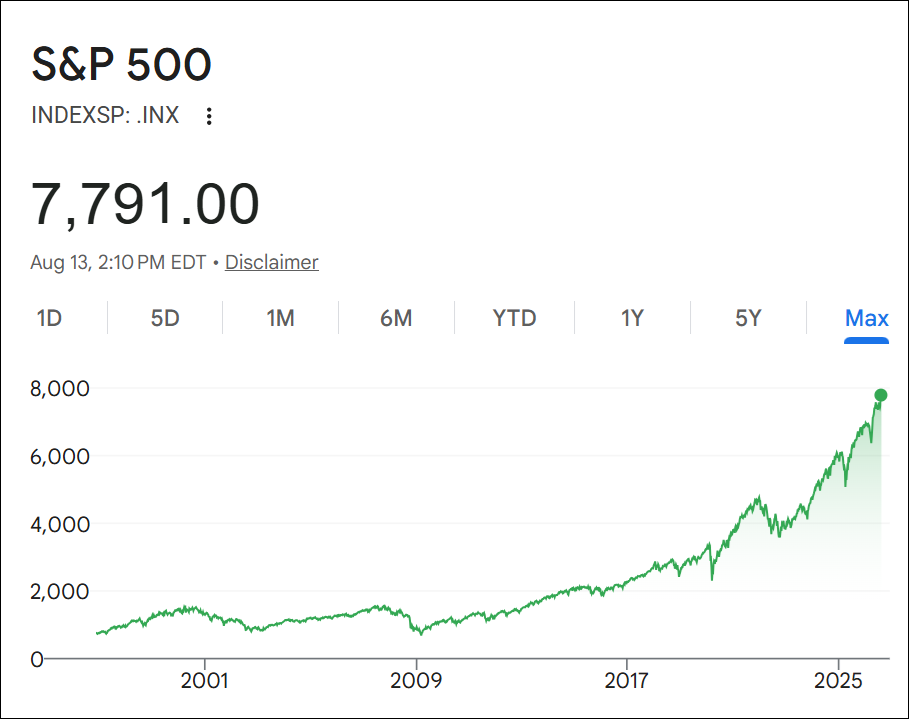
Stock market history
Which means every $100 invested in an S&P500 fund 30 years ago has turned into around $2,000 today.
Investments in real estate have been growing for decades just like stock market investments.
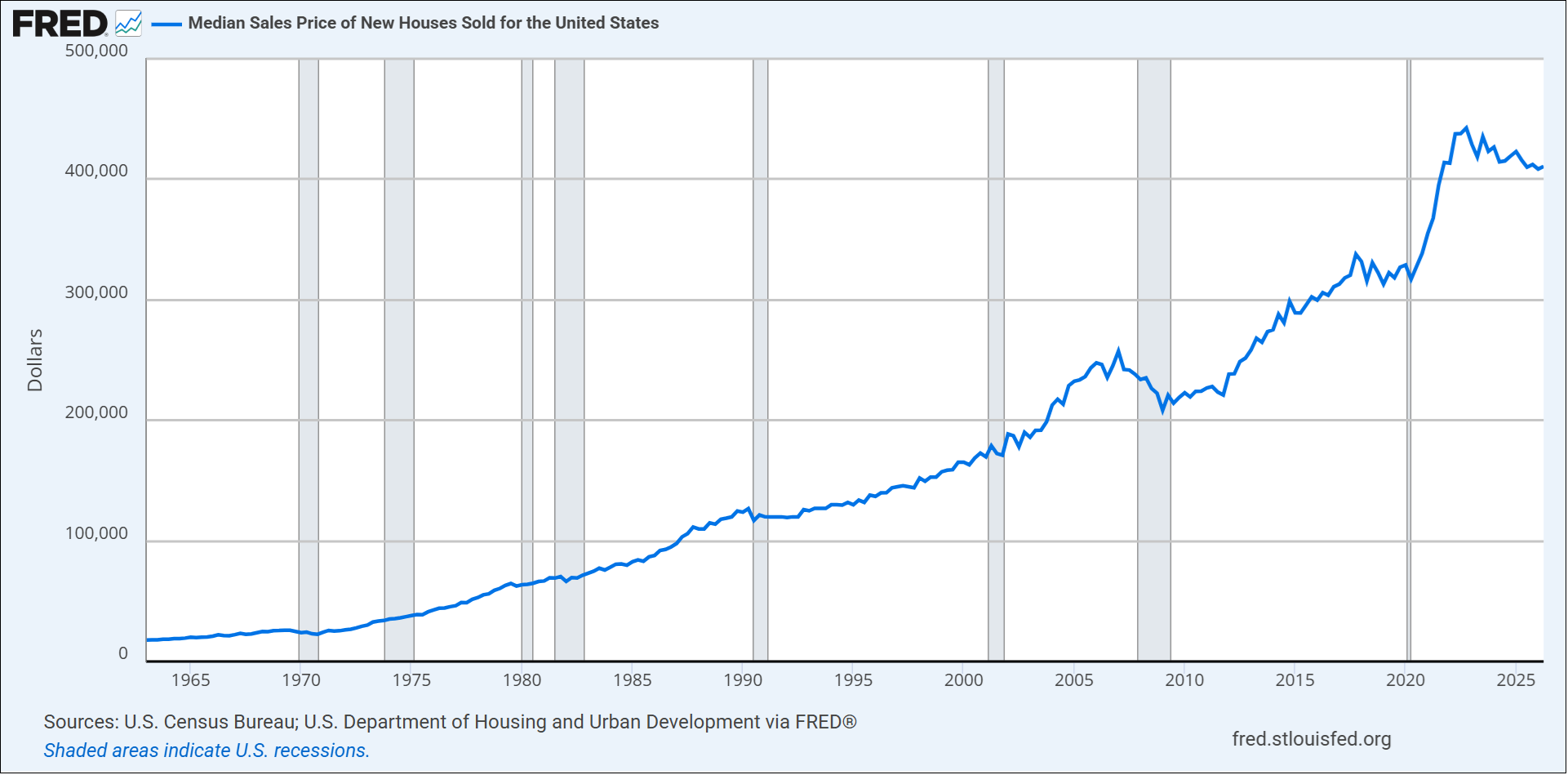
Real estate prices history
A $130,000 house bought 30 years ago with a home loan has turned into around $400,000 today.
Will this trend continue?
Time will tell.
Investing isn't about getting rich quick, it's about building long term wealth so you have long term freedom.
7. What Mistakes Should I Avoid?
According to JPMorgan Wealth Management.
Staying invested is all about:
- Not getting spooked. Remembering from 1980 to 2018, roughly 75% of the years ended with positive investment returns.
- Not trying to time the market. Remembering it's nearly impossible to predict what the best days and the worst days of the market will be.
- Keeping your emotions on course. Remembering it's normal to get emotional when the market moves up or down but sticking to your goals matters most.
Knowing what mistakes to avoid can help you reach your investing goals faster.
The bottom line
Investing can be overwhelming.
And not knowing what to expect can make it feel confusing.
But after learning answers to the biggest investing questions.
Investing can feel a bit less intimidating.
And the path to become a smart investor is a bit clearer (or so I've found).
Hope this cheat sheet is helpful on your investing journey.
Keep going 🤓
That's all for today.
See you next Saturday.