The 7 Steps to Start Investing (even with just $5)
Mar 28, 2026Read time - 4 minutes / Disclosure
Investing means:
- Becoming an owner.
- Owning different assets.
- Building your net worth.
Unfortunately, investing can be a confusing thing.
The Journey
Investing for the first time also means:
- Learning the options.
- Picking your strategy.
- Getting ready to invest.
There's many things to consider.
It can be confusing at first.
So how exactly does investing work?
And is it possible to start with little money?
5 things worth doing:
— JOHN HENRY (@thejohnhenry_) January 8, 2026
1. Studying money.
2. Investing every month.
3. Sticking with it long term.
4. Escaping the rat race early.
5. Creating & living your ideal life.
It's not easy. But worth it.
Like it was yesterday, I remember opening my first investing account.
I was working near Los Angeles, California selling cell phones in a mall.
It was one of my first jobs.
Seeing Will Smith, Hulk Hogan and other famous people shopping in the mall was pretty cool.
Something younger me enjoyed in my early 20s.
But that phone selling job was the start of my investing journey.
The company I worked for (AT&T) said if I put 5% of my paycheck in a retirement account.
They would match the money 100%.
So I signed up.
And each time I put in 5% of my paycheck..
Which was around $100.
They also put in $100.
It didn't seem like much.
But putting in $100 and them putting in $100 twice a month..
Meant $400 a month was going into my retirement account.
After doing that for a few years.
I logged in and saw the account balance was almost at $30,000.
I felt rich at the time..
For a guy selling cell phones in the mall in his 20s.
And glad I got the retirement match turned on.
But soon after, life took a turn.
And I lost my cell phone selling job in the mall.
Which was darn embarrassing at the time.
But losing that job eventually lead to a good thing.
And kicked off the next phase of my investing journey.
Working as a banker at Chase Bank.
And learning more about money.
And investing.
And spending 10 years watching how people use investing to leave their 9-5 jobs early.
In their 50s, 40s, and in their 30s.
Investing For Freedom
In my early 20s, I thought investing was something people did for retirement.
But after working in banking.
I realized investing was something people did for retirement..
Plus, something people did to leave 9-5 life decades early.
"The ultimate purpose of money is so that you do not have to be in a specific place at a specific time doing anything you don't want to do."
— Naval Ravikant
The Investor Roadmap
Here's the 7 steps to start investing I learned working in finance and how they helped me go from $80k in debt to $1M in investments.
Hope it's useful.
Let's dive in.
1. Save vs Invest
According to NerdWallet, the average savings account today only pays .39% in interest per year.
So $1,000 in an average savings account.
Only makes $3.90 in interest in a whole year.
$1,000 saved
times .39% interest
= $3.90
But according to the U.S. Government..
The cost of everyday stuff is going up 2.4% per year.
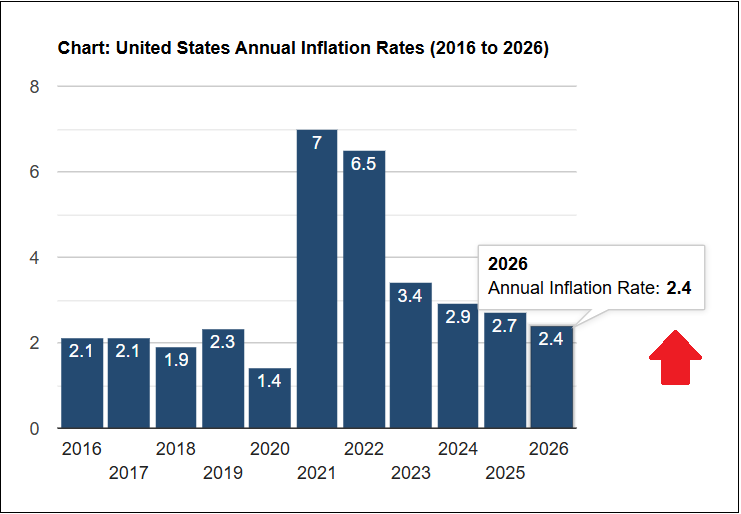
Annual inflation in the U.S.
So the cost of everyday stuff is going up faster (2.4% per year).
Than money saved in an average savings account (only .39% per year).
Ouch.
Now if comparing that to investing..
The stock market has been going up 10% per year on average for the past 30 years:
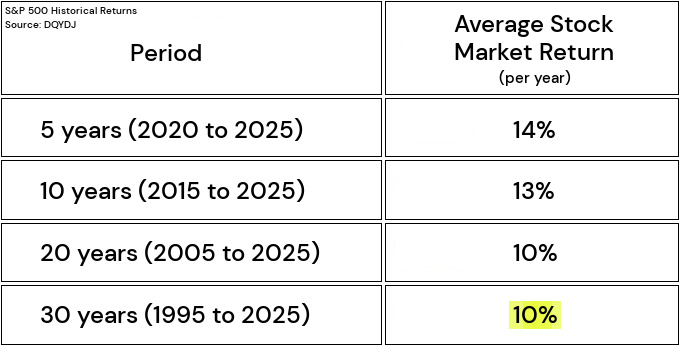
The first time I saw this info.
I realized I couldn't save my way to retirement.
That I needed to invest.
The stock market has grown faster than money saved in a savings account for the past 30+ years.
2. Get Ready to Invest
One of the most common investing questions is:
How much should I invest?
One way to figure this out is to use:
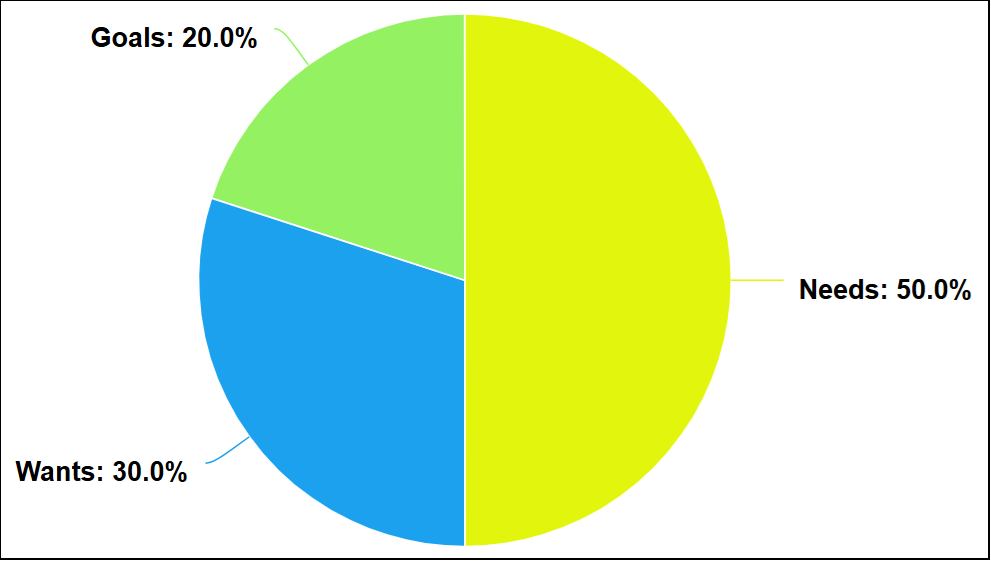
The 50/30/20 Rule
It says a person should budget their monthly income based on:
- 50% Needs (food, rent, etc)
- 30% Wants (vacations, new cars, etc)
- 20% Goals (investing, debt payoff, etc)
Here's how it looks:
After learning about this rule.
I knew I needed to get better with my money.
To have a solid plan if I wanted to leave 9-5 life early.
To figure out a way to invest more than $100 per paycheck.
So I paid a financial education company $7,000 thinking it would help me "figure out" my finances.
Looking back, it was a silly thing to do at the time.
I didn't have an extra $7,000.
And made monthly payments instead.
What they did do was email me a budget to fill out.
And told me to use it for 30 minutes every month.
And to do a call with them once a month for 6 months.
So, for $7,000 they got me in the habit of dealing with my money for 30 minutes every month.
And it worked..
If you need a simple way to keep track of your money.
To help get rid of debt.
To help save more money.
To help figure out how to invest more money too (and you don't want to pay someone $7,000).
Here's a simple money guide I created and use today: access my free Cash Flow Guide here
Getting ready to invest means organizing your money and using a simple budget just 30 minutes per month.
3. Pick Your Investing Strategy
Choosing an investing strategy depends on your goals.
Are they:
- To invest for a big purchase?
- To invest for your retirement?
- To invest for your retirement and leave 9-5 life early?
I realized my investing strategy was to invest for retirement and leave 9-5 life early.
To have control of my time.
To just work part time for myself.
To be able to do something I enjoy everyday on my own.
Other questions to think about when picking your investing strategy are:
- How much money will it take?
- How much time do you have to invest?
When I started working in banking and focusing hard on my money I was 30 years old.
I figured I had 30 more years to invest before "normal retirement age" in my 60s.
But realized I didn't want to work a 9-5 job and sit in a cubicle for 30 more years.
I wanted more freedom of my time sooner in life.
So figuring out my finances and double down on investing became my goal.
When picking your investing strategy, it's also important to remember:
Although the stock market goes up long term.
Things happen along the way that may cause the stock market to drop in the short term.
Charlie Bilello creates some neat charts that help explain this:
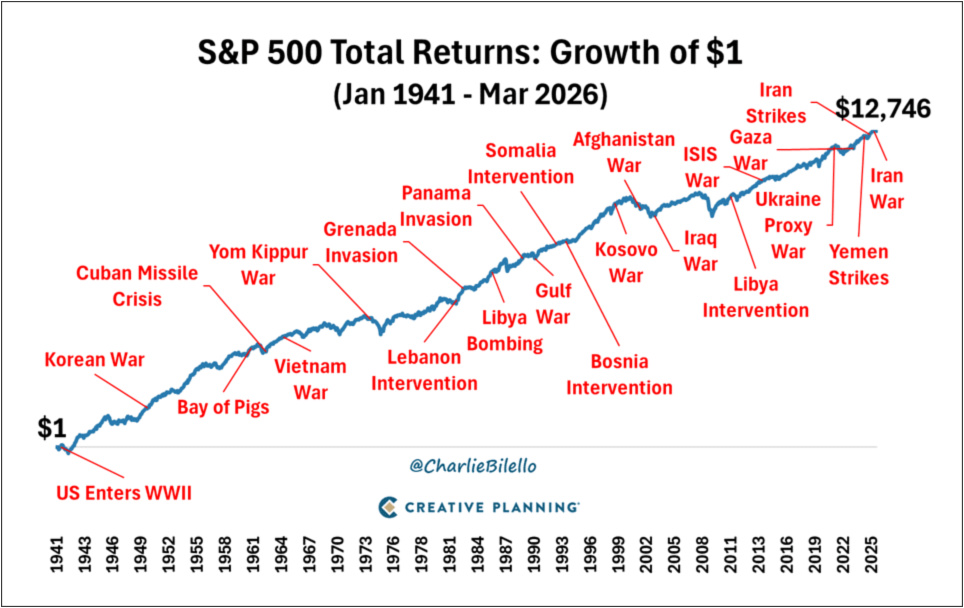
Stock market history
Picking your investing strategy means: knowing your goals, knowing how much time you have and deciding how much money you need.
4. Learn Different Investments
There's many types of investments.
When you start investing.
Your investments are referred to as:
"Your Portfolio"
Sounds fancy, right?
Think of your portfolio like a pie with many slices.
The investing term for these different slices is called "asset allocation".
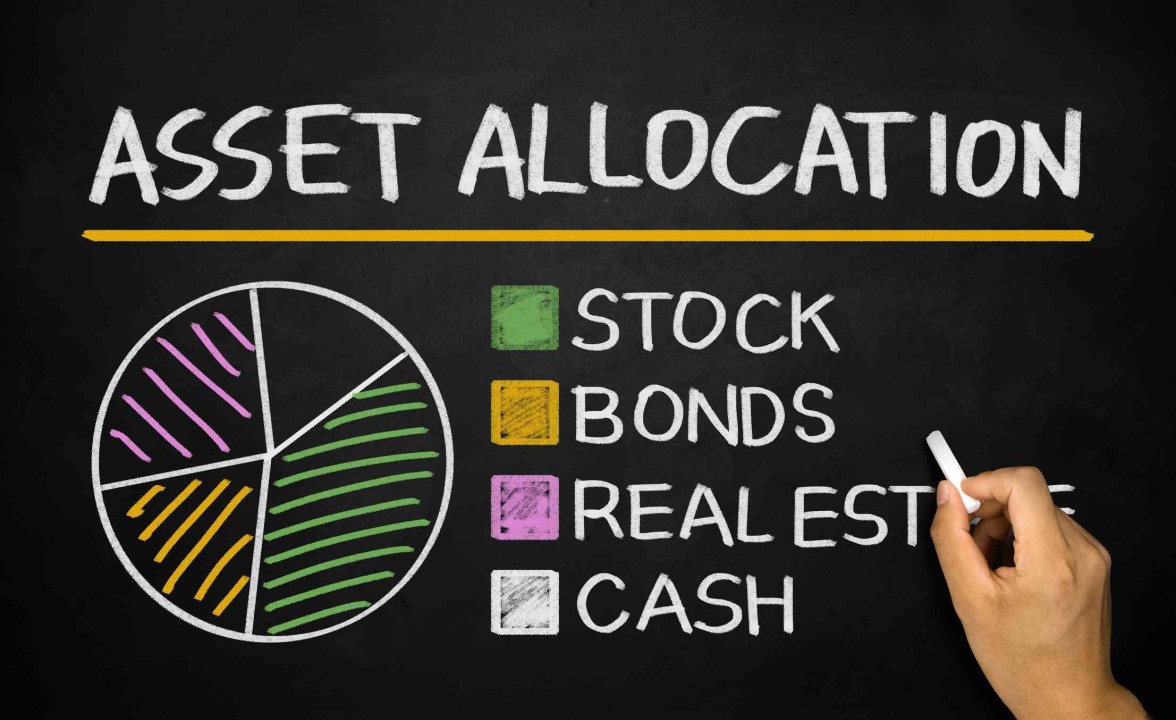
Maybe part of your portfolio is made up of:
- 40% stocks.
- 30% bonds.
- 20% real estate.
- 10% cash.
Each investor must decide what they want their investment portfolio to include.
After thinking about the different options.
I decided I wanted my investment portfolio to mostly include stocks and real estate.
So I invested half of the money I saved each month in stocks.
And saved the other half to help me get home loans to invest in real estate.
My investing plan
The 2 ways to invest in stocks include:
1. Buying the stock of an individual company.
Which means spending hours researching each company that you buy (to figure out which companies are worth buying).
Or..
2. Buying a stock fund.
Which means owning multiple companies and not needing to spend hours researching individual companies.
I didn't want to spend hours researching individual companies.
So, I just bought the Vanguard S&P500 Stock Fund (VOO).
Which includes the 500 largest companies in America, like:
- Apple
- Tesla
- Amazon
- Microsoft
+ 495 other companies
The neat thing about investing these days..
Is that anyone can open an investment account online in just 5 minutes.
With a large investment company like:
- Vanguard
- Fidelity
- Schwab
...and buy an S&P500 stock fund like The Vanguard S&P500 Fund with just $5.
(I invested in an S&P500 stock fund in my retirement account too)
Working in banking also helped me figure out how to get home loans to buy property over and over again without having to save up a boatload of money each time.
(access the free playbook I've used to get $30,000 when buying a home here)
Learning the different types of investments helps you figure out which type of investment portfolio you want to start creating.
5. Know Investing Account Types
There's many types of investing accounts.
Most of them have a lot of rules.
Rules like:
- How much money you can invest inside the account each year.
- When you can start taking your money out of the account without paying a penalty.
Here's 3 popular investing accounts:
1. The 401k
Many employers offer a 401k retirement account.
According to Fidelity Investments, if you put 5% of your paycheck into your 401k (if offered).
The average employer will match that money.
So if you make $70,000 per year.
And put 5% of your paycheck into your 401k.
Odds are your employer may put up to $3,500 into that account each year as well.
That's 5% of $70,000.
But there's limits on how much you can put into a 401k each year.
And there's limits on when you can take money out of your 401k before age 59 1/2 without paying a penalty.
If your employer offers a 401k.
It's important to read through and understand the 401k plan your employer offers before investing.
2. The IRA
IRA stands for: Individual Retirement Account
If your employer doesn't offer a 401k.
IRAs are similar.
And can be opened easily online in just 5 minutes.
With online investment companies like:
- Vanguard
- Fidelity
- Schwab
Money invested inside an IRA grows tax-free.
Just like a 401k.
But there's also limits on how much money you can put into the account each year.
And there's limits on when you can take money out of the IRA before age 59 1/2 without paying a penalty.
2026 investing limits:
— JOHN HENRY (@thejohnhenry_) March 4, 2026
By type of account:
- IRA: $7,500
- HSA: $4,400
- 401k: $24,500
- SEP IRA: $72,000
- Simple IRA: $17,000
You getting after it in 2026?
I decided to use a 401k to invest for my retirement.
Plus figure out how to get home loans to buy and hold real estate long term.
But the most common way I saw people leave 9-5 life early when working in finance..
..was watching people invest in a retirement account, plus invest a brokerage account.
Option 3. The Brokerage Account
Brokerage accounts are also called "self directed" investing accounts.
Or sometimes called "general" investing accounts.
They're different than a retirement account.
Some of the perks include:
- No age or income limits.
- No investing limits each year.
- No early-withdrawal penalties.
After learning more about a brokerage account.
I realized investing in a retirement account would help cover my bills in retirement.
But investing in a brokerage account would help cover my bills before retirement.
And if I invested enough money in a brokerage account.
I could leave 9-5 life earlier than my 60s.
Knowing the different investing account types helps you plan your retirement (or plan to leave 9-5 life early if you want to).
6. Choose How to Invest
There's 2 different ways to start investing.
Way 1:
Work with a financial advisor.
Many financial advisors charge $150-$350 per hour.
OR
If you already have a large amount of money to invest, like $100,000 (I sure didn't in the beginning).
The financial advisor may charge a percentage of your investments as their fee.
For example.
If they charged a 1.50% fee of your invested money each year.
$100,000 x 1.50% =
A $1,500 fee each year.
Or Way 2:
Invest online.
This means learning the 7 steps to start investing on your own or with a spouse/partner.
Paying a financial advisor $150-$350 per hour when starting from scratch can be tough.
In the beginning I focused on learning the basics on my own (which didn't take much since I just invested in an S&P500 Stock Fund).
Investing with a financial advisor means paying fees, investing on your own means learning the basics and investing on your own for starters.
7. Stay Invested
Investing is a long term journey.
And 3 things I've found to be helpful on that journey include:
1. Make investing automatic.
Which means setting up part of your paycheck to go into a retirement account.
Or a brokerage account.
Or both.
And that money is automatically invested.
It's one less thing to remember to do every month.
2. Don't get spooked.
The stock market has times when it drops:
- 10%
- 20%
- 30%
A bad day, a bad month, or a bad year is common in the short term.
But in the long term the stock market has grown 10% per year on average over the last 30+ years.
"Compound interest is the 8th wonder of the world."
— Albert Einstein
3. Don't try to time the market.
Trying to time the market perfectly is nearly impossible.
I've tried..
Deciding exactly when to buy something.
And deciding exactly when to sell something.
And it working out perfectly requires a lot of luck.
Making investments automatic, not getting spooked, and not trying to time the market are helpful habits to stay invested.
The bottom line
There's many things to learn as a beginner investor.
It can be confusing at first.
But it can also be exciting to watch your investments grow from $100:
To $1,000
To $5,000
To $10,000
To $25,000
To $50,000
To $100,000+
Back when I started my first investment account while selling cell phones in the mall.
It was hard to imagine having $100,000 in investments.
It seemed nearly impossible to imagine..
But as the years ticked by.
That tiny account grew bigger and bigger.
Through the ups and downs of life.
After losing my cell phone job in my 20s.
And racking up a bunch of credit card debt.
And almost filing for bankruptcy at age 30.
Things still worked out in the long run.
If you're feeling stuck or behind with your money.
I've been there too.
Just keep goin'.
I'm rooting for you.
That's all for today.
See you next Saturday.